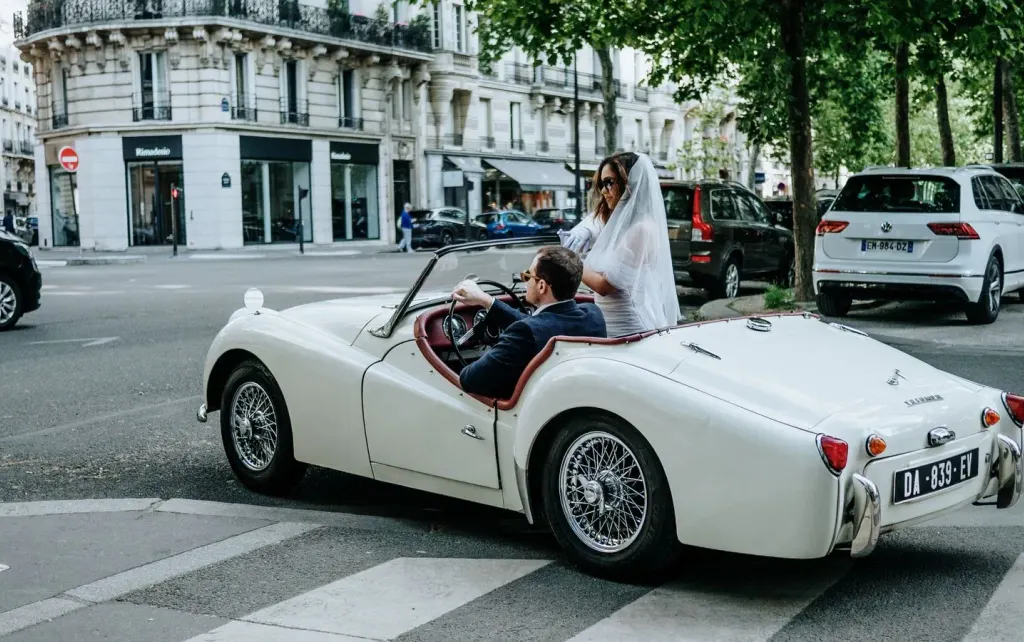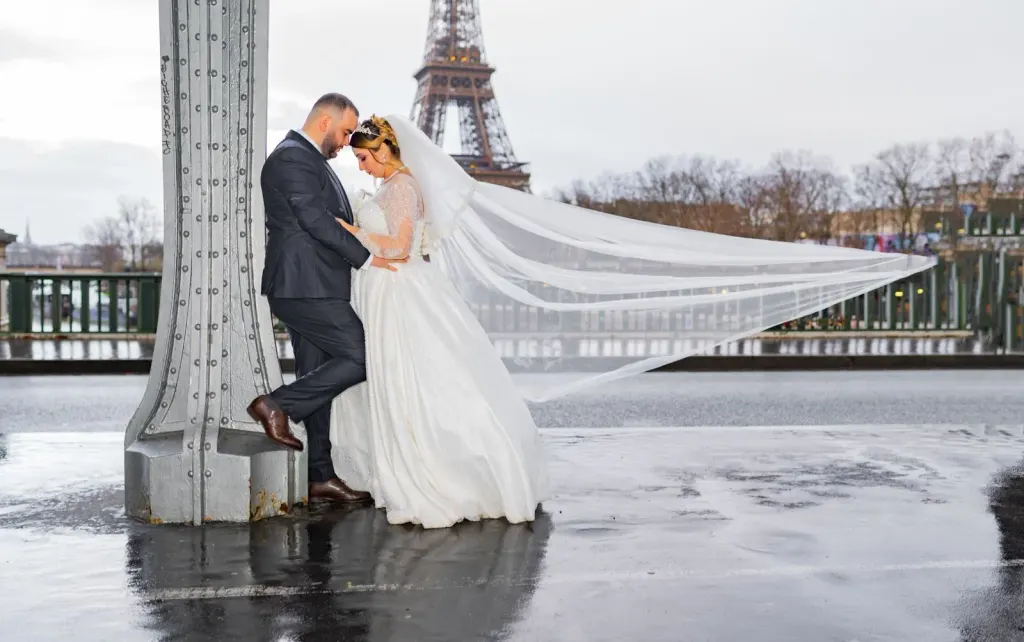
Paris does not improvise. Behind the image of a spring ceremony on a Seine terrace sits a precise administrative rhythm, and the couples who marry here without friction are the ones who learned that rhythm early. Between a residency clause written into the Civil Code, a religious calendar that runs on its own delays, and a booking window that opens further ahead than most people expect, the timeline is the real venue. Get it right and the city gives you everything; get it late and the best dates are already spoken for.
The residence rule that shapes every Paris wedding
French law is unambiguous on one point. Under Article 74 of the Civil Code, a couple may only marry in a commune where at least one of the two has established continuous residence for a minimum of one month before the banns are published. The town hall (mairie) verifies this with a proof of address, and there is no discretionary waiver for a beautiful venue or a memorable date. For Parisians and long-term residents this is a formality. For international couples it is the single fact that reshapes the whole plan.
The practical consequence is now standard practice: almost every international couple completes the legally binding civil marriage in their home country, then holds a symbolic ceremony in Paris. That symbolic ceremony carries no legal weight in France, which is precisely why it is unrestricted — it can happen in a private mansion, a château garden or on the water, on any date, led by a celebrant of the couple's choosing. It looks and feels like the wedding; the paperwork simply lives elsewhere. Anyone who promises to legally marry non-residents in a Paris mairie is misreading the law.
Religious ceremonies run on their own timelines
A religious ceremony adds a second calendar that does not bend to suit a venue. A Catholic wedding in a Paris parish generally requires the couple to begin preparation with the diocese six months to a year ahead, to provide baptism certificates and to complete a preparation course; many parishes also expect the civil marriage to be settled first. Jewish, Protestant and other traditions each carry their own documentation and notice periods. None of these run in parallel with a quick booking — they set the earliest honest date for the wedding, so they belong at the very start of the planning, not the end.
Paris wedding venues, Île-de-France estates, and what a day costs
The choice of setting drives both the budget and the lead time. Broadly, Paris offers a few clear categories:
- Palace hotels — turnkey, staffed and central, with per-guest catering that tends to run higher than anywhere else.
- Hôtels particuliers — private mansions rented as a blank canvas, elegant and discreet, but requiring you to bring in catering, furniture and production.
- Châteaux across Île-de-France — space, grounds and a country feel within an hour of the city, ideal for larger guest counts.
- The Seine — a chartered péniche for a ceremony or dinner that drifts through the heart of Paris.
Orders of magnitude help set expectations — these are ranges observed, not quotations, and they move with season, guest count and standard. Palace-hotel catering commonly falls around 300–650 € per guest; a private mansion or château hire for the day frequently sits between 10,000 and 40,000 €; wedding photography of this calibre often ranges 3,500–9,000 €; and full planning is typically billed at 10–15% of the overall budget. Treat them as a compass, not a price list.
The booking order — and what quietly blocks dates
Paris in high season fills 12 to 18 months out. The sequence that works is consistent: secure the venue and, where relevant, open the religious file first, because both carry the longest delays; then lock the photographer and the caterer; then the finer layers — florals, transport, entertainment. Reserve in that order and the day assembles cleanly around two fixed anchors.
One less obvious constraint deserves a place on the calendar. Paris is a fashion capital, and during the ready-to-wear shows and the haute couture weeks — roughly late January, late February to early March, late June to early July and late September to early October — the finest hotel suites, cars and staff are absorbed by the industry. Rates rise, availability thins, and a date that looked open can close overnight. Check the fashion calendar before you fall in love with a particular week.
One contact, from paperwork to the last car
The couples who actually enjoy their own Paris wedding are usually the ones who did not manage twenty vendors by email across time zones. The alternative is a single point of contact with the capacity to coordinate the full day — venue liaison, chauffeur-driven transfers for the couple and guests, photography and the moving parts around them, with each supplier held to one brief and one standard. Our Paris wedding packages are built around exactly that: one interlocutor, a briefed roster of suppliers, and a timeline that respects both the law and the season. When the plan starts early and reads in the right order, the city does the rest.